Province of On

About Beef in Ontario

This information is brought to you by Canada Beef, the national beef promotion organization, in partnership with the Beef Farmers of Ontario, which represents the 19,000 beef cattle producers in the province.

Videos

OUR FARMERS AND RANCHERS

Canada Beef represents a community of over 60,000-strong beef farming and ranching families across the country. In Ontario, we may choose ball caps over cowboy hats but we’re easy to spot in your community. Ontario beef farmers are your neighbours and friends, and you’ll find us at your local bank, grocery store, arena, school, farmers’ market or pretty much anywhere else you frequent. There are 19,000 of us across the province and we all have one thing in common – we’re passionate about raising cattle and taking care of the land to provide safe, healthy and delicious beef products for your family and ours.

Cow-Calf Farming and Ranching

Over the first few months, each calf will obtain nutrients from its mother’s milk and, over time, begins to graze on Canada’s grass pastures. Once calves are ready to be weaned, they weigh around 500 to 800 pounds and will continue to grow while grazing on pastures or eating dried grasses in the form of hay. Farmers ensure cattle have access to water at all times, and raise their animals with the goals of ensuring both healthy cattle and a sustainable environment.

Cow-Calf Farming and Ranching

Grazing cattle are an integral part of the grassland ecosystem and play an important role in nutrient recycling. Pastures and hay fields used for raising beef cattle are important stores of carbon and provide habitat to many species at risk, as well as preservation of wetlands that otherwise may be subject to cultivation. As with any food production system, there is an environmental footprint associated with beef production. Canadian beef farmers, however, take great pride and care to raise cattle using environmentally sustainable practices combined with world-class food safety and quality assurance systems. Beef farming isn’t just a business, it’s also a way of life.
Feeding Farms

After grazing on open pastures, cattle are often moved to feedlot farms, where they are fed a diet containing grain. This period, before an animal goes to market, is called “finishing”. In Canada, cattle typically spend between 60-200 days at a feedlot farm.

Feeding Farms

Canada has an abundant supply of grain. This includes barley, wheat and corn. In Ontario, corn is the most abundant grain, and most beef cattle are fed a diet that includes corn as either the main ingredient or a component. It should be noted though, that an animal spends approximately 80 per cent of its life eating fresh and dried grass. A grain-forward diet is fed only during that final finishing period to help bring the animal to market weight and achieve the sought-after marbling in the meat. Cattle can also make use of crops damaged by weather or plant imperfections, as well as other produce and food items that do not meet the quality standards for human consumption. Many cattle in Ontario eat a diet that includes foods like the spent grain leftover from the brewing or distilling processes, imperfect potatoes or other vegetables, or even baked goods. Cattle are the original “up-cyclers”! Regardless, the animals have access to a nutritionally balanced diet that is created with the assistance of a professional working in animal nutrition. Farmers also work very closely with their veterinarian to provide care for their animals.

Beef Production

After the feeding or finishing stage, and the cattle have reached market weight (typically 1,400 to 1,500 pounds), they are transported by trucks to a regulated facility for processing into beef products.

Beef Production

In Canada, the Canadian Food and Inspection Agency inspectors oversee the implementation of safety, animal welfare and quality standards from the time animals enter the plant until the final beef products are shipped to grocery stores and restaurants. He efforts of our farmers leads to the pure enjoyment of a variety of cuts of beef, including delicious steaks, roasts and ground beef that end up on tables across Canada.

Our Beef

Our great-tasting and nutritious beef is produced by Ontario beef farmers. World-class cattle genetics and careful attention to animal care combined with generations of experience and tradition helps us to deliver a product that is truly exceptional. Ontario farmers work hard to bring you fresh, local, nutrient-rich, delicious beef with the knowledge that the land we depend on must be preserved, through responsible environmental stewardship, for the next generation –and beyond.

Nutrition

Did you know beef fits into a healthy diet. Delicious and nutritious, beef is a meal maker full of nutrients with goodness in every bite. Ground beef, steaks, roasts, all beef are not only tasty, but they are also an excellent source of protein. Beef is one single ingredient. There’s nothing added and nothing taken away. And like other meats, beef is a complete protein. It has the full set of amino acid building blocks your body needs to help maintain muscle, repair tissue, and build antibodies.

Nutrition

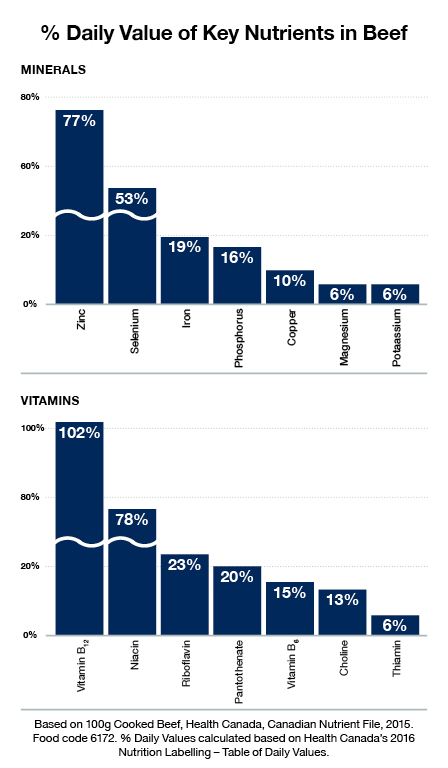
Protein is not just about building strong muscles as protein makes up about 50% of bone structure. It also provides vitamins and minerals, like iron which is one of beef’s most famous nutrients. However, it’s important to understand that not all iron is created equal. The kind of iron in beef is better absorbed than the kind found in plants. And there is another benefit, meats like beef contain vitamin B 12, a vital vitamin that’s not available from plants yet it’s plentiful in beef. Beef is nutritious for every age and every stage of life, especially for babies, teens, pregnant women, and seniors as these groups have high nutritional needs. Therefore, choosing nutrient rich foods, like beef, really matters.

Marbling

Canadian beef is not just a favourite here at home, it’s also sold around the world. Have you ever wondered what makes it so tasty? Marbling is one key aspect and refers to the specs of white fat within the lean meat. The amount of marbling contributes to the juiciness, tenderness and flavour of our beef.

Marbling

Marbling also helps determine the quality grade of beef. The Canadian beef grading system helps ensure your quality expectations are met. Look for Canada’s beef grades when shopping for your favourite beef cut. Canada’s top three quality grades are Canada AA, Canada AAA, and Canada Prime. Each grade requires an increasing amount of marbling with Canada Prime having the highest level. In Alberta the marbling and flavour are in part a result of the grain we feed our cattle.

% Daily Value of Key Nutrients in Beef

% Daily Value of Key Nutrients in Beef

Source: 2021 Census of Agriculture